Monday, November 30, 2015

See How Our Megacities Will 'Slip Under The Waves'...

Study shows how large parts of New York, London, Shanghai and other cities will be submerged as a result of rising sea levels


By AFP
3:00PM GMT 30 Nov 2015

Large swathes of Shanghai, Mumbai, New York and other cities will slip under the waves even if an upcoming climate summit limits global warming to two degrees Celsius, scientists reported on Sunday.


A 2 C (3.6 Fahrenheit) spike in Earth's temperature would submerge land currently occupied by 280 million people, while an increase of 4 C (7.2 F) - humanity's current trajectory - would cover areas lived on by more than 600 million, the study said.


"Two degrees Celsius warming will pose a long-term, existential danger to many great coastal cities and regions," said lead author Ben Strauss, vice president for sea level and climate impacts at Climate Central, a US-based research group.

Sydney after a 4C rise  Photo: Climate Central
Sea level rises corresponding to these 2 C or 4 C scenarios could unfold in two hundred years, but would more likely happen over many centuries, perhaps as long as 2,000 years, according to the research, published by Climate Central.

Capping the rise in Earth's temperatures to 2 C above pre-industrial levels is the core goal of the 195-nation UN climate summit in Paris from November 30 to December 11.


The most effective way to slow global warming is to slash the output of the greenhouse gases which drive it.

But even if emissions reduction pledges - many of them conditioned on financial aid - submitted by 150 nations ahead of the Paris summit are fulfilled, it would still put us on a pathway for a 3 C (4.8 F) world, the United Nations has warned.

Achieving the two-degree goal remains a serious challenge.

Mr Strauss and colleagues apply on a global scale the same methodology they used for a recent study that focused on temperature-linked sea level rise in the United States, published in the US Proceedings of the National Academy of Sciences.
That study concluded that both Miami and New Orleans are doomed to crippling impacts.

In the new report, the country hit hardest by sea level rise under a 4 C scenario is China.


Today, some 145 million people live in Chinese cities and coastal areas that would eventually become ocean were temperatures to climb that high.

Four of the 10 most devastated megacities would be Chinese: land occupied today by 44 million people in Shanghai, Tianjin, Hong Kong and Taizhou would be underwater.

India, Vietnam and Bangladesh do not fare much better. All told, Asia is home to 75 per cent of the populations that today reside in zones that would no longer be classified as land in a climate-altered future.

Thirty-four million people in Japan, 25 million the United States, 20 million in the Philippines, 19 million Egypt and 16 million in Brazil are also in future 4 C seascapes.
While the 2 C scenario is also grim, limiting warming to that extent would spare China and other nations much misery, said Strauss.

"There is a world of difference between 2 C and 4 C, which threatens more than double the damage," he told AFP. "We have a very large choice ahead of us."

The sea level rise corresponding to 2 C would eventually be 4.7 metres, and for 4 C almost double that, the study found.

The projections are based on climate models taking into account the expansion of ocean water as it warms, the melting of glaciers, and the decay of both the Greenland and West Antarctic icesheets.

Timing is harder to predict, Strauss said: "It is easier to estimate how much ice will eventually melt from a certain amount of warming than how quickly it will melt."
Normally a study of this nature would be published by a peer-reviewed journal, as was the earlier research on the US.

In this case, however, Strauss felt that the new results should be taken into account ahead of the crucial climate summit in Paris.

"These findings seemed too relevant to COP21" - the 21st Conference of the Parties, the official name for the UN climate meeting - "to risk that they be published afterwards," he said.

AFP sent the study to four experts - including Jean-Pascal van Ypersele, until this year Vice-President of the UN's Intergovernmental Panel on Climate Change - for evaluation, and all of them described the work as "solid" and methodologically sound.


Strauss said his study shows that the stakes at the Paris negotiations are extremely high.

Sunday, November 29, 2015

Natural Disasters In Asia Pacific Result In US$23 Bln Economic Losses Annually


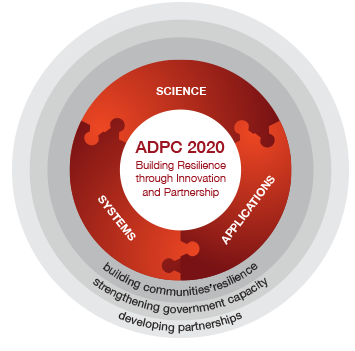
BANGKOK:  The increasing intensity and frequency of cyclones, flooding and drought have severely impacted the environment, livelihoods and food security in Asia-Pacific.

Extreme weather events and other natural disasters in the region affect more than 163 million people and cause economic losses worth US$23 billion each year, says the Asian Disaster Preparedness Center in a statement.

"The impact of disasters and climate change is most evident in vulnerable communities that rely on agriculture and natural resources for their livelihood.

"For building sustainable development, it is critical to ensure the resilience of these sectors to the changing climate," said its executive director Shane Wright.

Governments and experts in disaster risk reduction from 13 countries gather this week in Bangkok, ahead of the Paris United Nations climate conference to identify ways for enhancing resilience to climate-induced disasters in the region.

Asian Disaster Preparedness Center and Oxfam host the Pan-Asian Regional Policy Forum on Mainstreaming Disaster Risk Reduction and Integration of Climate Change Adaptation into the Environment, Livelihood and Food Security Sectors, for three days, ended yesterday.

While identifying actions to ensure risk-informed decision-making in the Asia-Pacific, the forum also prepares recommendations for the climate change conference in Paris begining tommorow.


Livelihoods in Asia are largely dependent on agriculture - particularly on rice farming, fisheries, and livestock.

"Only by integrating disaster-risk reduction and climate change adaptation into development planning and governance, can we ensure sustainable development in the region, as well as the communities' ability to bounce back after disasters," said Wright.

In 2016, governments will translate global commitments into national and local action plans leading to a critical time for a multi-stakeholder dialogue and regional collaboration to build resilience, save lives and protect livelihoods from the impact of natural disasters.

Saturday, November 28, 2015

Paris Climate Summit: World Leaders Told To Iron Out Differences Before Talks End

France steps up diplomatic efforts to get consensus on a global deal six days before official talks conclude
Laurent Fabius, French minister of foreign affairs, speaks during an interview at the French embassy in Brasilia, Brazil. Photograph: Evaristo Sa/AFP/Getty Images

Fiona Harvey andKim Willsher in Paris
(Saturday 28 November 2015 07.01 GMT)

Negotiators at key UN climate talks in Paris that open next week are being told by the French government they must iron out their main differences six days before the end of the talks, according to the foreign minister, Laurent Fabius.

World leaders including Barack Obama, Xi Jinping, Angela Merkel and David Cameron are preparing to fly to the French capital to open the COP 21 negotiations, which begin on Monday and aim to produce an international deal to reduce carbon emissions that will kick in from 2020.

The highly unusual demand by the French hosts is a sign of their confidence that they believe a deal is within sight and that the huge diplomatic push they have made to ensure the talks succeed has not been knocked off course by the terrorist attacks two weeks ago.

But Fabius’s request to have the final version of the negotiating text signed off by next Saturday will be met with scepticism among some observers of the talks. Frequently, previous incarnations of the UN talks have finished one or even two days after deadline.
Fabius vowed in an interview to forge an agreement that would be “universal, legally binding, durable and dynamic”.

In the wake of the attacks, Fabius confirmed that security would be tightened around the conference centre, which is on the outskirts of Paris, near the airport where a planned attack was foiled and not far from the St-Denis district where the attacks were planned. There will be a total lockdown on the area of Paris surrounding the conference centre on Sunday afternoon, when many of the heads of state and government are expected to arrive, in time for the first official day of talks on Monday.

Fabius praised the climate activists who had agreed to call off their planned march through Paris as a result of the attacks. “I have to salute the responsibility of the organisations who would have liked to demonstrate but who understand that if they demonstrate in a public place there is a security risk, or even a risk of panic.”

He said: “The first week [of the fortnight-long talks] will be devoted to reducing the number of options in the text,” in which delegates have suggested multiple alternatives in wording on certain issues. “I will ask that by [next] Saturday midday the text will be transmitted to me, the president of the COP, and at that moment everyone will know where we are and the procedure to follow. Obviously, I hope a maximum number of options will have been lifted but I will have to take into account the situation at that moment.”

In a veiled reference to the situation at the last climate summit in Copenhagen, when negotiations were thrown into chaos by rumours of a draft text that had been circulated to some governments, he added: “I don’t have a text in my pocket that I can pull out. I have found with the delegations that there is a real willingness to move forward, a willingness to be transparent.

“If there is no agreement by Saturday, of course I will take the initiative. I will see the different groups with the facilitators,” he said. “Success is at our door, but it is not yet won.”

Fabius, speaking in his resplendent office in France’s foreign ministry, was in ebullient mood. Amply gilded and frescoed, with French windows looking out on to ornamental gardens on the banks of the Seine, the ministry was built with the intention of impressing France’s many allies, and potential enemies.

The French are hoping that the discord that has marked previous talks, preventing a legal agreement at the last climate summit in Copenhagen in 2009, will be averted by meticulous planning. 

Fabius, despite his punishing schedule since the atrocities in Paris, has been habitually squeezing questions on climate change into every meeting with his foreign counterparts and heads of state, as has the French president, François Hollande.

Before the talks, governments responsible for more than 90% of global emissions – including all major developed economies and most of the biggest developing nations, such as China and India – have laid out plans forcuts or curbs to their emissions. These will form the centrepiece of any deal, and even if a deal is not reached, these commitments will be hard for governments to renege on.

Fabius said the COP 21 talks were “a success in terms of numbers and actions” pledged by countries on emissions reductions. “If we add together all these contributions, we avoid catastrophe, in the form of the consequences of inaction, a world four, five or six degrees [warmer]. But we are still not at 2C or 1.5C, which is the goal of Paris.”

Scientists estimate that if the world warms by more than 2C on average above pre-industrial levels by the end of this century, the effects of climate change will become catastrophic and irreversible. A 2C limit has long been the goal of UN climate conferences, and current pledges from all countries are estimated to lead to warming of 2.7C to 3C, although the proposed deal has a provision for increased emissions cuts in future.

Fabius urged governments to move beyond the entrenched positions of the past. “We must do our utmost to avoid the blocking of an agreement because of irreconcilable principles. A good approach is to take this issue subject by subject.”

On financing, for instance, he said there was general agreement that rich countries would ensure the funds promised to poor nations to help them cut emissions and adapt to global warming would be forthcoming.

In a pointed reference to one of the countries that may hold out on an agreement, Fabius said: “I was talking to the prime minister of India and he said for the moment my resource is coal, so he is approaching this on how he can make coal more clean.”

But he said that generally the world was moving towards decarbonised energy. “We must not, it seems to me, present this climate question as a constraint, but an opportunity. China is a big leader in the world on solar energy.

There are lots of opportunities in different countries,” he went on. “For instance, programmes suggested for Africa – we have to help this development, it can give direct employment, and in the case of Africa can be a factor for growth.”